Database Management System Training

The Database Management System (DBMS) Training Program is a hands-on course designed to teach the fundamentals of database design, development, and management. Participants will learn key concepts such as relational databases, SQL, normalization, indexing, transactions, and database security. The program covers popular DBMS platforms like MySQL, PostgreSQL, and Oracle, providing practical experience in querying, managing, and optimizing databases.
 

Through real-world projects, learners will gain skills in database creation, management, and troubleshooting, along with advanced topics like performance tuning and backup strategies. The course is ideal for aspiring database administrators, software developers, and IT professionals.


Why Choose Cycronet?

Expert-Led Training

Industry Experience

Industry Relevent Curriculum

Hands-On Projects

LMS Access

Comprehensive Tools and Technologies

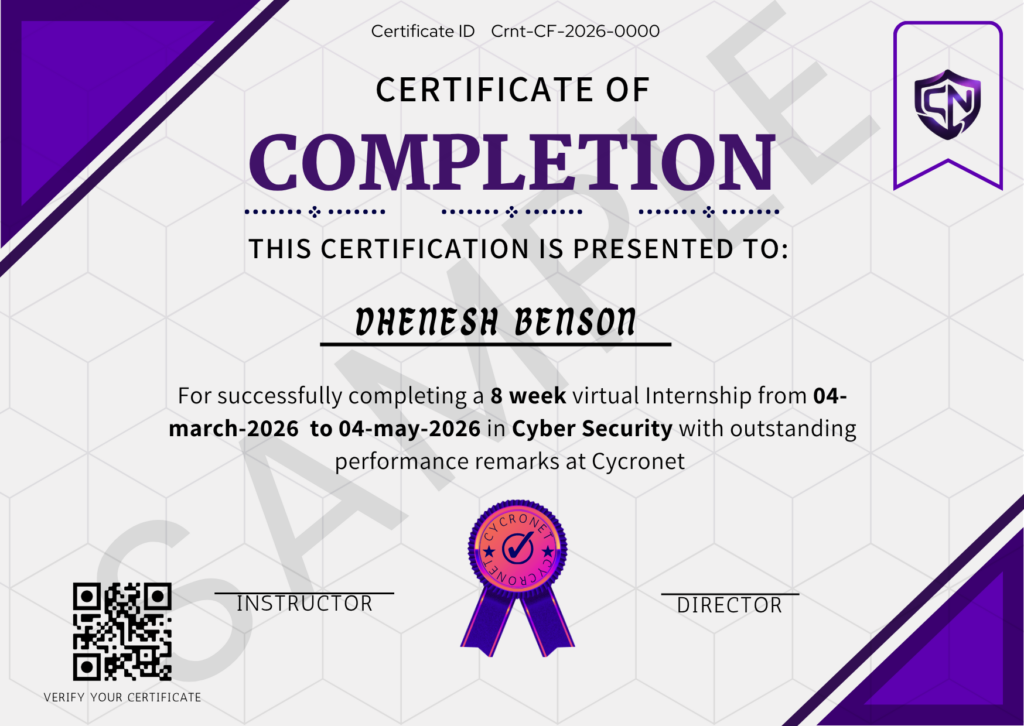
professional certifications

Career Support

TRAINING PATH

  • What is a Database?
  • Types of Databases
  • Components of DBMS
  • Advantages and Applications of DBMS
  • Data Models
  • Introduction to Entity-Relationship (ER) Diagrams
  • Normalization
  • Designing and Creating a Database Schema
  • Basics of SQL and RDBMS
  • SQL Commands
  • Writing Basic Queries
  • Using Clauses
  • Joins and Subqueries
  • Views, Indexes, and Stored Procedures
  • Aggregate Functions
  • Triggers and Transactions
  • Introduction to NoSQL Databases
  • Differences Between SQL and NoSQL
  • Working with Document-Oriented Databases
  • CRUD Operations in NoSQL Databases
  • Installing and Configuring a Database Management System
  • User Management and Roles in a DBMS
  • Database Backup and Recovery Strategies
  • Monitoring and Optimizing Database Performance
  • Authentication and Authorization
  • Data Encryption
  • Managing Database Permissions and Roles
  • Protecting Against SQL Injection and Other Threats


  • Distributed Databases and Sharding
  • Data Warehousing and OLAP Concepts
  • Working with Big Data Technologies
  • Introduction to Cloud-Based Databases

SKILLS COVERED

Database Design and Modeling

SQL and Query Optimization

Data Normalization

Denormalization

Transactions and Concurrency Control

Indexing and Performance Tuning

Relational Algebra

Relational Calculus

NoSQL Databases (e.g., MongoDB, Cassandra)

ER Diagrams and Schema Design

Database Security and Backup Strategies

Stored Procedures and Triggers

Data Warehousing and OLAP

Distributed Databases

Big Data Integration with DBMS

Advanced PL/SQL Programming

Industry Projects

Library Management System

Develop a system to manage books, borrowers, and transactions in a library. Include features like book search, member registration, due date tracking, fines management, and inventory updates.

The key component include

1.Book Inventory Management 

2.User Management 

3.Borrowing & Returning 

4.Reservation System 

5.Reporting & Analytics 

6.Notification System 

7.Search and Filtering 


Technologies Java/Python, MySQL/PostgreSQL (for database), React/Angular (for frontend), Flask/Django/Spring Boot (for backend), RESTful APIs, and tools for email/SMS notifications (e.g., Twilio, SendGrid).

Hospital Management Database

Create a database system to manage patient information, doctor schedules, medical records, appointments, and billing. Ensure data privacy and secure access for staff and patients.

The key component include

1.Patient Records Management 

2.Staff Management

3.Appointment Scheduling 

4.Billing & Payments 

5.Inventory Management 

6.Reports & Analytics

7.Security & Access Control 


Technologies MySQL/PostgreSQL/Oracle Database, Python/Java/C# (for backend processing), React/Angular/Vue.js (for frontend development), RESTful APIs, and tools for data visualization (e.g., Power BI, Tableau).

Inventory Management System

Build a system for tracking inventory levels, orders, suppliers, and sales. Include features like stock updates, order alerts, and generating reports on product status and supply chain metrics.

The key component include

1.Inventory Tracking 

2.Stock Management 

3.Order Management 

4.Reporting & Analytics 

5.Multi-Location Support 

6.Security & Role-Based Access 

7.Integration with Sales & Accounting Systems 


Technologies MySQL/PostgreSQL/MongoDB (for database), Python/Java/C# (for backend processing), React/Angular/Vue.js (for frontend development), RESTful APIs, and tools for barcode/QR code integration (e.g., Zxing, Zbar).

Online Banking System Database

Develop a database to manage customer accounts, transactions, loans, and banking services. Implement secure access and data integrity for transactions, account balances, and account history.

The key component include

1.Customer Account Management

2.Transaction Management 

3.Loan and Credit Management

4.Security & Authentication  access.

5.Reports & Analytics 

6.Integration with Third-Party Services .

7.Customer Support & Notifications 


Technologies MySQL/PostgreSQL/Oracle Database (for data storage), Java/Python/C# (for backend), Angular/React/Vue.js (for frontend), RESTful APIs, encryption tools (e.g., OpenSSL), and payment gateway APIs (e.g., PayPal, Stripe).


Real Estate Management System

Build a database to manage property listings, client details, transactions, and payment records. Include features like property search, rental or sale status updates, and transaction history.

The key component include

1.Property Listings Management

2.User Account Management

3.Client Interaction Tools

4.Transaction Management

5.Reports & Analytics

6.Security & Data Privacy

7.Integration with Third-Party Services


Technologies MySQL/PostgreSQL/MongoDB (for database), Python/Java/C# (for backend), React/Angular/Vue.js (for frontend), RESTful APIs, Google Maps API, and data visualization tools (e.g., Chart.js, Tableau).

CERTIFICATIONS

Pricing plan

Starter

( Project-Based )

 ₹ 499

Features
 Real-world project tasks
No lectures or tutorials
 Self-paced execution
• Certificate after completion
Tag us to verify your work 

Pro

( Recorded + Projects)

 ₹ 999

Features
Recorded lectures
 Step-by-step project tutorials
Learn + build simultaneously
 Flexible schedule
 Certificate included

Premium

( Live + Mentorship )

 ₹ 2,499

Features
Live interactive classes
 Full recorded access
Doubtsolving  
 Guided project building
 Strong portfolio + certificate

Companies Hire these skills

Frequently Asked Questions

A Database Management program equips individuals with the skills and knowledge required to design, implement, and manage databases. It typically covers topics such as database design, SQL programming, database administration, data modeling, relational and non-relational databases, and performance optimization. The program often includes hands-on projects and real-world case studies to prepare learners for careers as Database Administrators, Data Analysts, or Database Developers.

A Database Administrator (DBA) is responsible for managing and maintaining databases to ensure they are secure, efficient, and accessible. Their tasks include installing and configuring database systems, optimizing performance, managing backups, ensuring data security, and troubleshooting issues. Using tools like MySQL, PostgreSQL, Oracle, and SQL Server, they support organizations in managing large-scale data systems. Our database management training program provides the technical expertise required to excel in this role.

Our DBMS (Database Management Systems) trainers are seasoned industry professionals with deep expertise in database design, optimization, and management. With extensive experience in SQL, NoSQL, and advanced database technologies, they bring real-world insights into every lesson. We ensure that only trainers with exceptional alumni ratings and a proven track record of delivering high-quality education continue to be part of our faculty, offering students the best learning experience in DBMS concepts and applications.

After completing an online database management program, career paths include roles such as Database Administrator, Database Developer, Data Analyst, SQL Developer, and Data Engineer. With experience, you can advance to senior positions like Lead DBA, Database Architect, or Data Operations Manager. Opportunities exist across industries like technology, healthcare, banking, retail, and government.

Database management is essential across industries like banking, healthcare, retail, technology, telecommunications, education, and e-commerce. Organizations in government, logistics, and media also rely heavily on database management for storing and managing large-scale data efficiently. This database management certification program is ideal for individuals aiming to pursue careers in these high-demand sectors.

Our Self-paced and Mentor-led training both last for a period of 1-2 months. Our Advanced training last for a period of 4 months.